
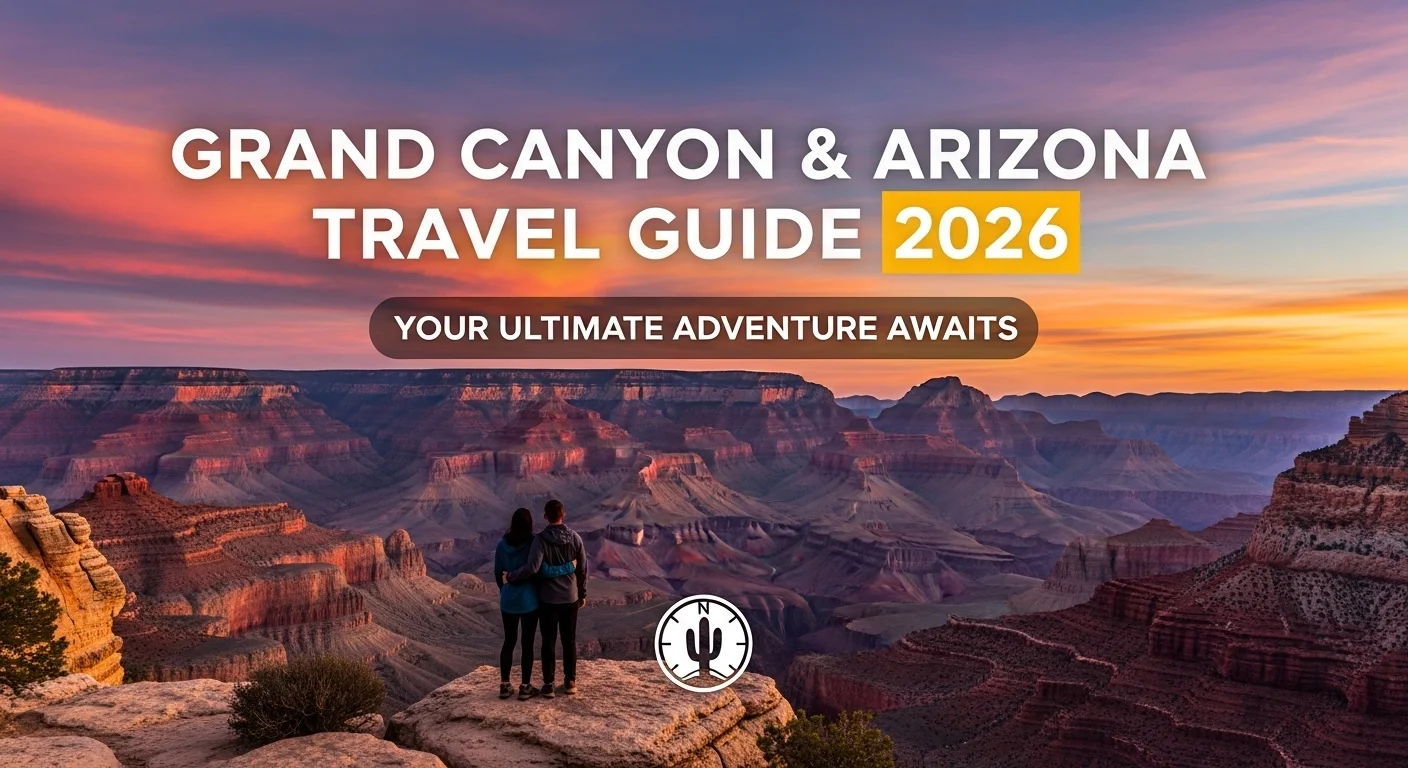
Arizona is home to some of the most dramatic and awe-inspiring landscapes on the planet. At its heart lies the Grand Canyon, a mile-deep chasm carved by the Colorado River over millions of years that leaves every visitor speechless the moment they first peer over the rim. But Arizona offers far more than just one famous canyon. From the red rock spires of Sedona to the surreal sandstone corridors of Antelope Canyon, the towering buttes of Monument Valley to the ancient saguaro cactus forests of the Sonoran Desert, this state is a paradise for nature lovers, photographers, hikers, and anyone who craves wide open spaces under impossibly blue skies.
This comprehensive Grand Canyon and Arizona travel guide for 2026 will help you plan the perfect trip through the Grand Canyon State. We cover the best time to visit, how to explore both rims of the Grand Canyon, must-see destinations beyond the canyon, top hiking trails for every fitness level, practical budget tips, and everything else you need to turn your Arizona dream trip into reality.
Best Time to Visit Arizona and the Grand Canyon
Arizona’s desert climate means extreme heat during summer months, so timing your visit is crucial for a comfortable experience. The best time to visit the Grand Canyon and northern Arizona is from March through May and September through November. Spring brings wildflower blooms across the desert floor and comfortable hiking temperatures in the 60s and 70s Fahrenheit at the South Rim. Fall offers similar pleasant weather with the added bonus of golden aspen trees in the higher elevations around Flagstaff and the North Rim.
Summer from June through August brings scorching temperatures that regularly exceed 100 degrees Fahrenheit in Phoenix, Sedona, and the inner canyon. However, the South Rim sits at 7,000 feet elevation and stays 20 to 30 degrees cooler than the desert floor, making it manageable even in summer. The North Rim, at 8,200 feet, is even cooler but is only open from mid-May through mid-October due to heavy winter snowfall. Winter at the South Rim brings fewer crowds, occasional snowfall that creates breathtaking photo opportunities, and the most affordable hotel and lodge rates of the year.
Exploring the Grand Canyon South Rim
The South Rim is the most visited area of Grand Canyon National Park, and for good reason. It is open year-round, easily accessible from major highways, and offers the most developed visitor facilities including lodges, restaurants, shuttle buses, and ranger programs. The park entrance fee is $35 per vehicle and is valid for seven days, or you can use an America the Beautiful annual pass that covers all national parks for $80.
Begin your South Rim experience at Mather Point, the first major viewpoint you encounter after entering the park from the south entrance. This is where most visitors get their jaw-dropping first look at the canyon, and it never fails to deliver that overwhelming sense of scale and beauty. From here, walk along the Rim Trail, a mostly paved and flat path that stretches 13 miles along the canyon edge connecting all the major viewpoints. You do not need to walk the entire trail as free shuttle buses run between stops, allowing you to hop on and off throughout the day.
The most spectacular viewpoints along the South Rim include Yavapai Point with its geology museum that explains how the canyon formed, Hopi Point which is widely considered the best spot for watching sunset paint the canyon walls in shades of red and gold, and Desert View Watchtower at the eastern end of the rim road, a 70-foot stone tower designed by architect Mary Colter in 1932 that offers panoramic views stretching all the way to the Painted Desert and Navajo Nation. Arrive at your chosen sunset viewpoint at least 45 minutes early during peak season as the best spots fill up quickly.
Top Hiking Trails in the Grand Canyon
Hiking below the rim is the single best way to truly appreciate the immense scale and geological wonder of the Grand Canyon. The most popular trail is the Bright Angel Trail, which descends from the South Rim village area with rest houses at 1.5 miles and 3 miles that provide shade, water in season, and restrooms. A round trip to the 3-Mile Resthouse takes approximately three to four hours and gives you a genuine below-the-rim experience without requiring extreme fitness. The trail continues all the way to the Colorado River at the bottom, a 9.5-mile one-way trek that should only be attempted as an overnight trip with a backcountry camping permit.
The South Kaibab Trail offers arguably the most dramatic views of any Grand Canyon hike. Unlike Bright Angel which follows a side canyon, South Kaibab descends along a ridgeline with unobstructed 360-degree panoramic views at every turn. The hike to Ooh Aah Point is just 1.8 miles round trip and takes about one to two hours, making it perfect for travelers with limited time. Continue to Cedar Ridge at 3 miles round trip for even more spectacular views from a flat mesa surrounded by canyon walls on all sides. Remember that hiking into the canyon is deceptively easy because gravity is on your side going down, but the climb back up takes roughly twice as long and requires significantly more effort and water.
Essential hiking safety tips include starting early in the morning before temperatures rise, carrying at least one liter of water per hour of hiking, wearing sun protection and sturdy footwear, and eating salty snacks to replace electrolytes lost through sweat. The National Park Service strongly advises against attempting to hike to the river and back in a single day, as this has resulted in numerous heat-related emergencies and fatalities over the years.
The Grand Canyon North Rim: A Quieter Alternative
While the South Rim attracts roughly 90 percent of all Grand Canyon visitors, the North Rim offers a completely different and equally rewarding experience for those willing to make the extra effort to get there. Sitting 1,000 feet higher than the South Rim and surrounded by dense forests of pine, spruce, and aspen, the North Rim feels cooler, greener, and far more remote. It receives only about one-tenth the visitors of the South Rim, meaning you can enjoy the canyon views in peaceful solitude even during the summer months.
The Grand Canyon Lodge on the North Rim is a historic stone and timber structure perched right on the canyon edge, with a sunroom that offers what many consider the single most spectacular indoor view in any national park. The North Kaibab Trail is the only maintained trail descending into the canyon from this side, and the hike to Coconino Overlook at 1.4 miles round trip provides an excellent introduction to below-rim hiking. For scenic drives, the Cape Royal Road winds 23 miles through the Kaibab Plateau to Cape Royal and Point Imperial, the highest point on either rim at 8,803 feet, with sweeping views that extend across the Painted Desert and into Utah.
Beyond the Grand Canyon: Must-Visit Arizona Destinations
Sedona: Red Rock Country
Sedona is one of the most visually stunning places in America, surrounded by massive red sandstone formations that glow like fire during sunrise and sunset. Located about two hours south of the Grand Canyon, Sedona is famous for its hiking trails, spiritual vortex sites, art galleries, and luxurious spa resorts. Top hikes include Cathedral Rock for a moderate scramble with incredible summit views, Devil’s Bridge for Arizona’s largest natural sandstone arch, and the West Fork of Oak Creek for a shaded canyon walk through towering walls of red and white sandstone. The scenic drive along Highway 179 through the Village of Oak Creek is one of the most beautiful short drives in the entire state.
Monument Valley Navajo Tribal Park
Monument Valley, located on the Arizona-Utah border within the Navajo Nation, features the iconic sandstone buttes and mesas that have appeared in countless Western films, photographs, and advertisements. The towering formations including the Mittens, Merrick Butte, and Totem Pole rise dramatically from the flat desert floor, creating a landscape that looks almost otherworldly. You can drive the 17-mile Valley Drive loop in your own vehicle for $8 per person, but hiring a Navajo guided tour allows access to restricted areas and provides cultural insights that make the experience far richer. Visit at sunrise or sunset when the sandstone glows in deep shades of orange and crimson against the vast desert sky.
Antelope Canyon and Horseshoe Bend
Near the town of Page in northern Arizona, Antelope Canyon is a slot canyon carved by flash floods over millions of years into the Navajo sandstone. The narrow passages feature smooth, flowing walls that create mesmerizing patterns of light and shadow, especially when sunbeams penetrate from above during midday hours. Antelope Canyon is located on Navajo land and can only be visited with an authorized Navajo guide. Book your tour well in advance as slots fill up quickly, especially for the popular Upper Antelope Canyon.
Just 10 minutes away, Horseshoe Bend offers one of the most photographed views in the American Southwest. A short 1.5-mile round trip walk from the parking area brings you to the edge of a 1,000-foot cliff overlooking a dramatic horseshoe-shaped meander of the Colorado River. The viewing area is unfenced so exercise extreme caution, especially with children. Arrive before 10 am or after 4 pm to avoid the largest crowds and for the best lighting conditions for photography. The parking fee is $10 per vehicle.
Arizona Travel Budget Tips and Practical Advice
Arizona can be surprisingly affordable if you plan strategically. For Grand Canyon accommodations, the historic El Tovar Hotel and Bright Angel Lodge on the South Rim offer unbeatable locations but book up six months to a year in advance. More affordable options include the Yavapai Lodge inside the park or the numerous hotels in the gateway town of Tusayan just outside the south entrance, where rates start around $100 to $150 per night. Camping at Mather Campground inside the park costs just $18 per night and puts you within walking distance of the rim.
For getting around Arizona, a rental car is essential as public transportation between destinations is very limited. Renting from Phoenix Sky Harbor Airport typically offers the best rates, with economy cars available from $30 to $45 per day. Gas prices in Arizona average around $3.50 to $4.00 per gallon, slightly below the national average. Plan your road trip route to minimize backtracking since distances between major attractions are significant. Phoenix to the Grand Canyon South Rim is about 230 miles, Grand Canyon to Monument Valley is 180 miles, and Sedona to Phoenix is 115 miles.
Save money on food by packing a cooler with groceries from Flagstaff or Phoenix, as dining options inside national parks and at remote destinations are limited and overpriced. Many gas stations along Arizona highways have surprisingly good delis and taco counters that offer filling meals for under $10. Bring a refillable water bottle and fill up at every opportunity since staying hydrated in the desert climate is absolutely essential for your health and safety.
Final Thoughts: Experience the Magic of Arizona
Arizona is a destination that humbles you with its raw natural beauty and ancient geological wonders. Standing on the rim of the Grand Canyon watching the play of light and shadow across a billion years of exposed rock is an experience that changes your perspective on time, nature, and your place in the world. Combined with the red rocks of Sedona, the sweeping vistas of Monument Valley, and the surreal beauty of Antelope Canyon, Arizona offers a road trip experience that rivals any destination on Earth.
Start planning your 2026 Arizona adventure today, and explore more destination guides and travel inspiration on TravelingFirst to make every journey extraordinary.